
Snap Launches New Tools for SPECS Developers
Whether you’re starting from scratch or bringing work you’ve already built, new Lens Studio tools make it easier to create for SPECS

Today at AWE, we unveiled SPECS: a new kind of computer designed for real life, built into see-through glasses. SPECS are built from the ground up for augmented reality, so computing can move out of your pocket and into the world around you where life actually happens.
That shift creates a huge opportunity for developers. Instead of adapting phone apps to a new screen, developers can build experiences that understand the space around you, respond in the moment, and feel useful, shared, playful, and full of wonder.
And we want to make it easier than ever to build them.
Lens Studio started as a tool for making Snapchat Lenses. Today, it’s a powerful developer environment for real-world, immersive, and connected AR experiences. Over the past year and a half, we’ve shipped 10 Snap OS updates with more than 40 new features and APIs, and developers have already published hundreds of Lenses for SPECS.
Now, we’re introducing new tools and programs to help developers move faster — whether they’re exploring an idea, testing on device, bringing over existing work, or building a business.
A new agentic development framework
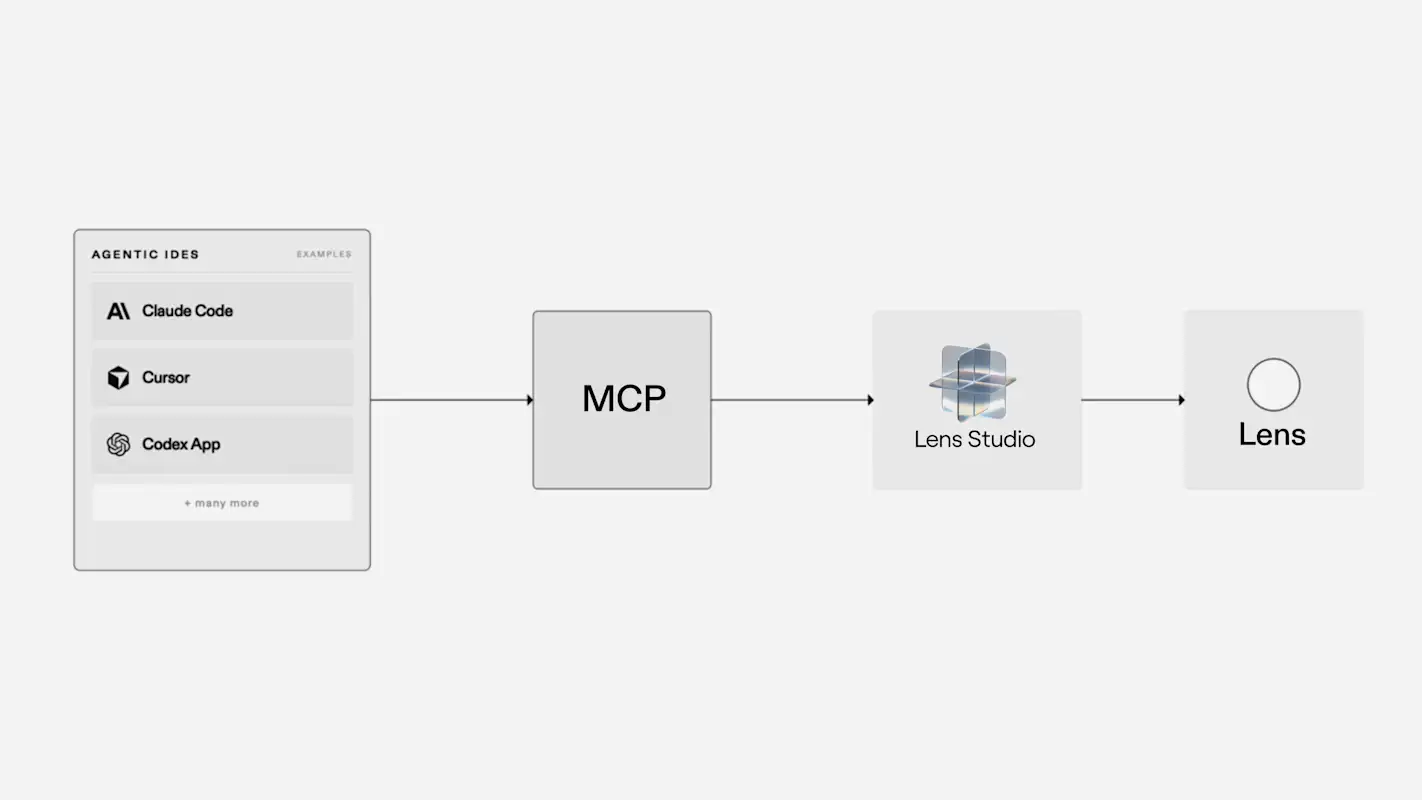
First, we’re rolling out the developer preview of agentic development for building SPECS Lenses in Lens Studio.
This brings Lens Studio agents and skills into the AI tools developers already use, including Claude Code, Codex, and Cursor. It can help with the repetitive but important parts of building: exploring ideas, prototyping, testing, debugging, optimizing, publishing, and improving experiences after they ship.
Developers stay in control by reviewing suggestions, steering the creative direction, and making final decisions.
A new benchmark for spatial AI
We’re also releasing the SPECS Spatial Benchmark to help developers understand how AI models perform on real-world spatial tasks — like reasoning about layouts, coordinates, object relationships, and how digital content should respond to the physical world.
Bringing existing work to SPECS
For teams with existing projects, we’re introducing new ways to bring that work to SPECS. Our Migration Agent helps port projects from tools like Unity into Lens Studio by translating project structures, visual components, and scene configurations into native Lens Studio structures.
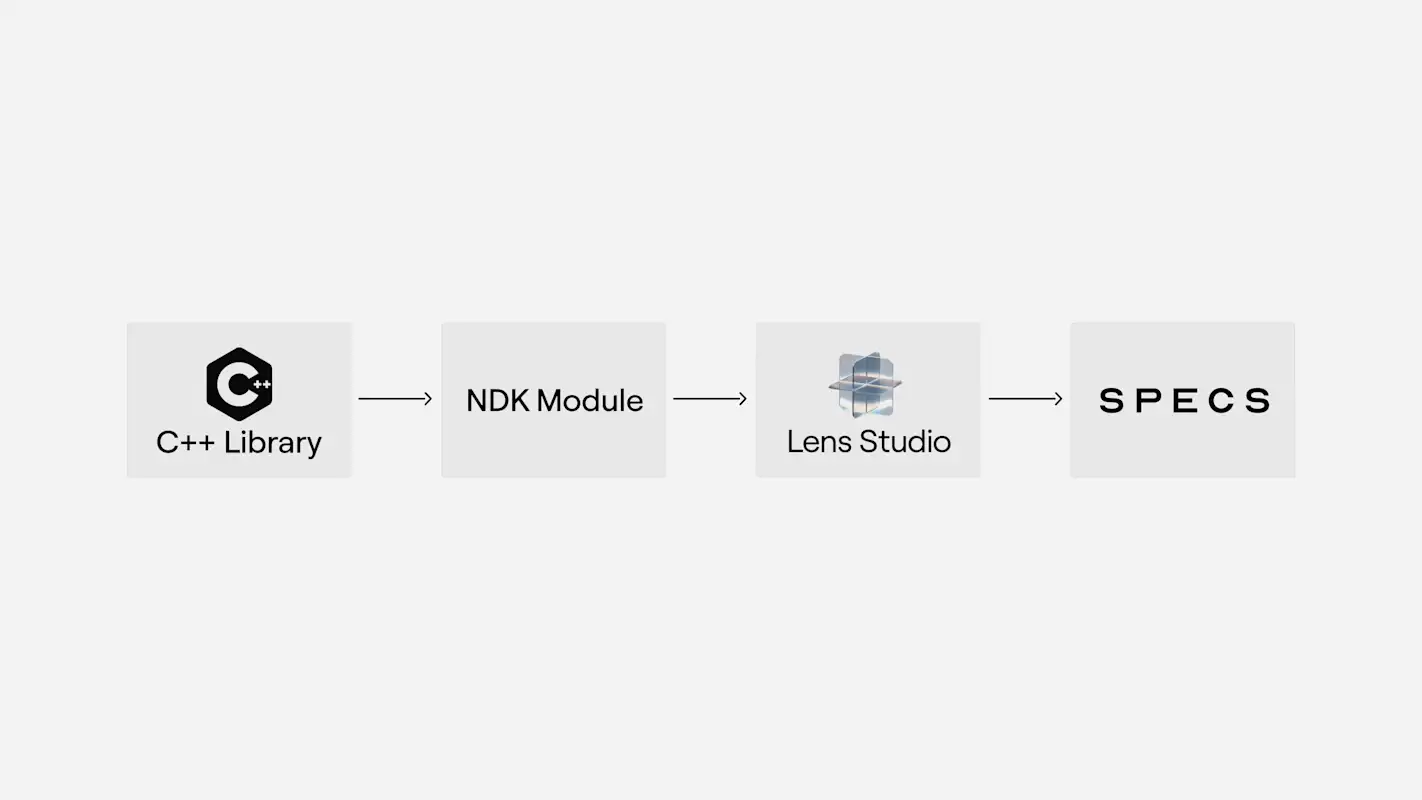
And our new Native Development Kit lets developers bring C and C++ code directly into Lenses, so teams can reuse performance-critical work across areas like spatial mapping, physics, audio, networking, and navigation.
Partners are already putting these tools to work. Niantic Spatial is bringing their VPS to SPECS through the NDK, powering immersive real-world experiences. And Mapbox ported its Navigation Engine in less than two hours.
At launch, Commerce Kit will begin powering in-Lens purchases and subscriptions, so developers can build real businesses.
Join the SPECS Developer Program
Developers can join the SPECS Developer Program and start building with the new Lens Studio agents and skills today. Developers can also apply to test their best Lens prototypes on SPECS at Snap studios around the world, giving developers a chance to see how their ideas perform on hardware, refine their experiences, and prepare for this next generation of computing.
We can’t wait to see what you create!
Get In Touch
For press requests, email press@snap.com.
For all other inquiries, please visit our Support site.